
5 Ways Campspot + Wild Energy Automate Utility Metering
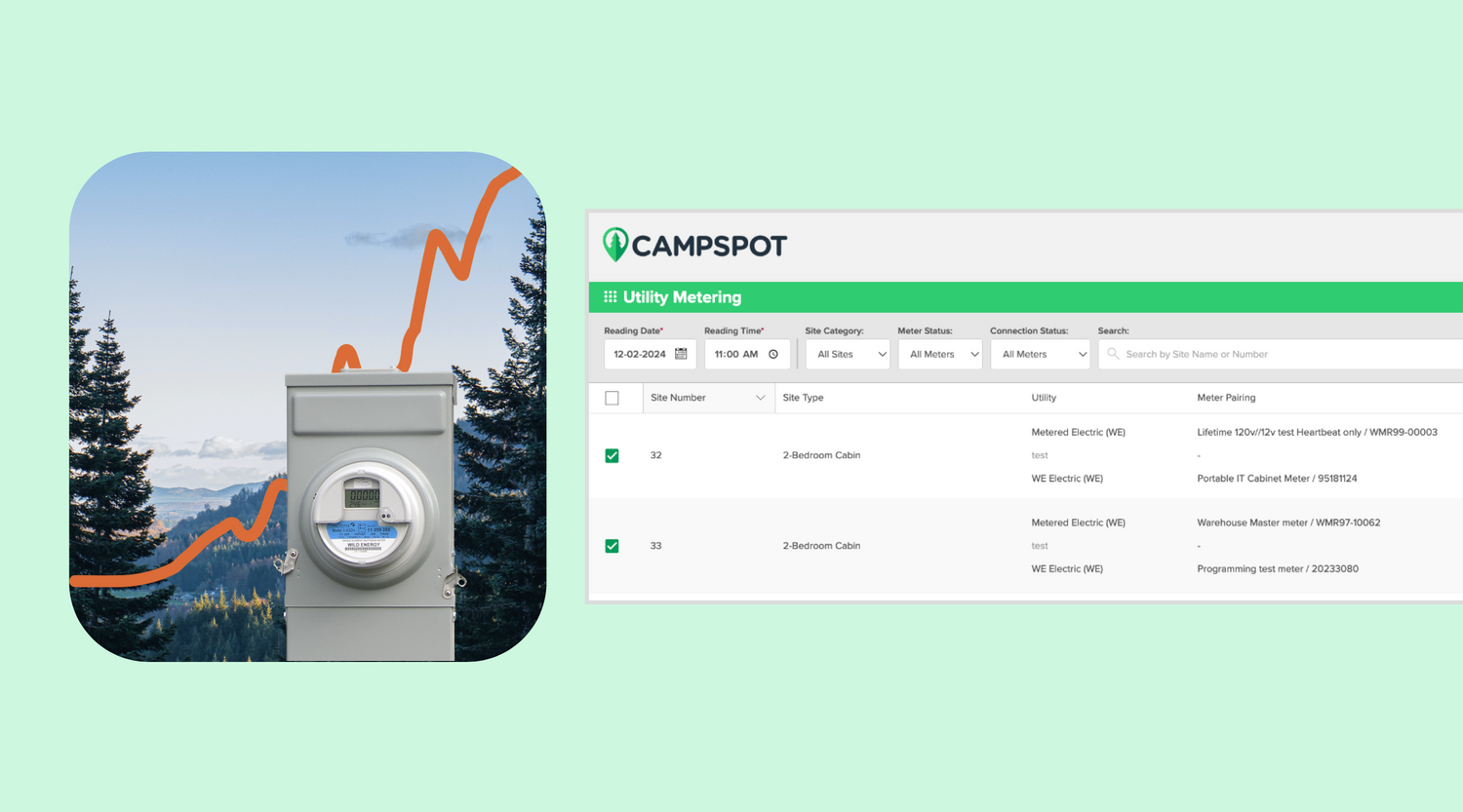
If you didn’t catch the walkthrough of the Campspot + Wild Energy integration, here’s a quick breakdown of how smart utility metering is being used by real parks to save time, reduce errors, and increase control.
Whether you’re still doing manual reads or just starting to think about short-stay electricity recovery, this video highlights five practical use cases already in action.
1. Automated Meter Reads for Monthly Guests
Stop walking the park with a clipboard. Campspot can now automatically pull readings from Wild Energy’s smart meters based on check-in, check-out, and monthly intervals.
You control the schedule—pull reads at 9:00 AM on arrival, 11:59 PM on the last day of each month, and 3:00 PM on departure. Every guest, every site, read consistently and accurately.
2. Short Stay Utility Metering
Using flexible automation rules, Campspot users can now meter short-term (also known as transient) stays. You define the minimum length of stay (e.g. 2 nights or more), and the system pulls reads at check-in and check-out—no staff involvement required.
This is ideal for parks beginning to recover electric usage from shorter guest stays.
👉 Learn more about Short Stay Utility Metering
3. On-Demand Manual Reads
Not ready to automate everything? You can still manually request a meter read for any past date and time. Wild Energy stores every usage record minute by minute, so you’ll always have accurate data on hand when needed.
This is helpful for troubleshooting, exceptions, or parks easing into automation.
4. Tiered Usage and “Included” Electricity
If you want to offer guests a limited amount of electricity at no charge (e.g. 10 kWh per stay), you can set that threshold in Campspot. Once it’s exceeded, the system calculates overage automatically.
Wild Energy can help you determine the right threshold using data from similar parks or trial usage at your own.
5. Guest Invoice Integration
While invoice automation is still being developed, Campspot currently allows manual assignment of metered charges to guest invoices. It’s simple, intuitive, and based on accurate meter data.
Parks that prioritize invoice automation are encouraged to submit a feature request directly through Campspot’s interface.
Watch the Full Integration Walkthrough
See how the system works, what it looks like inside Campspot, and how real operators are using it to modernize their utility infrastructure.


